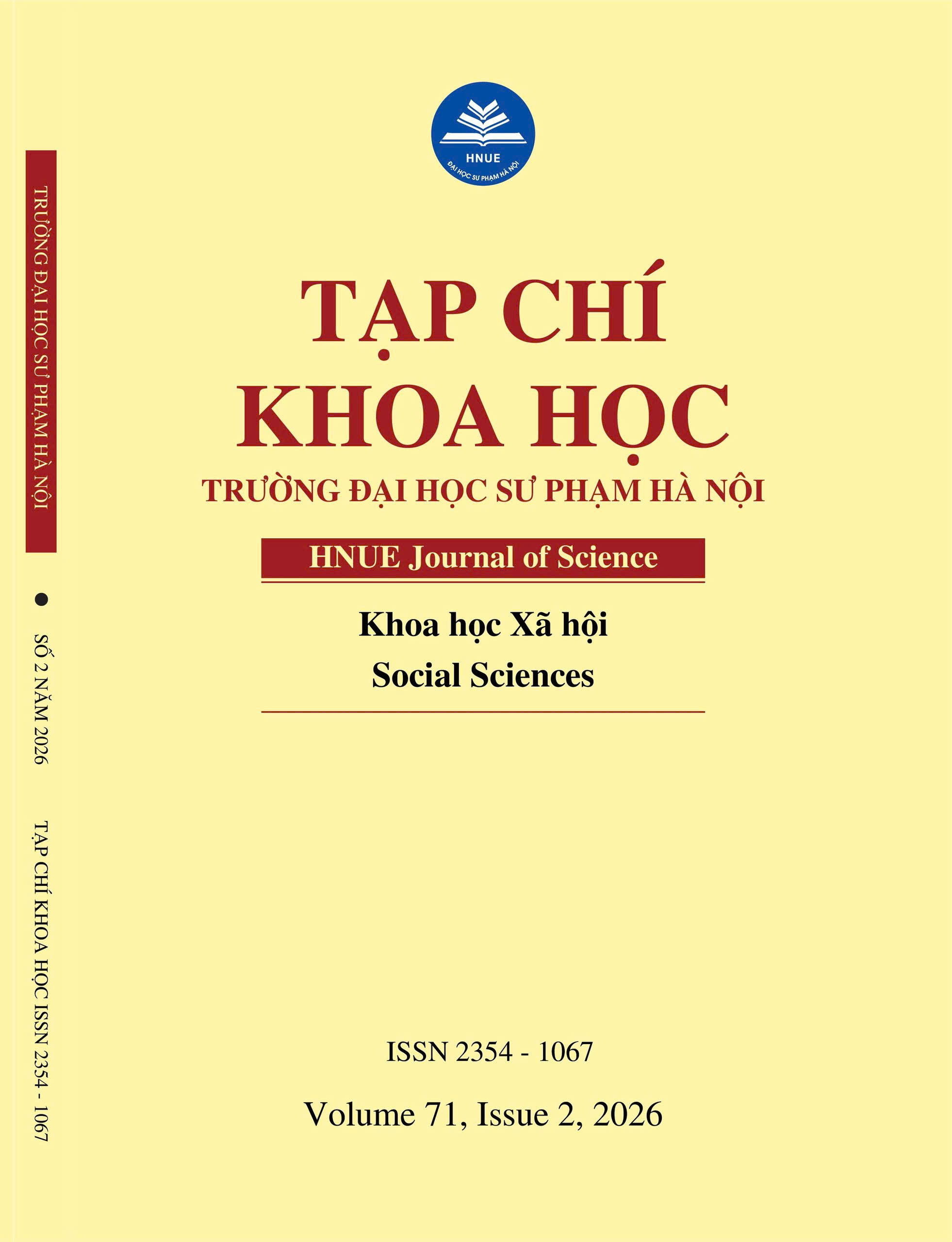
THE HISTORICAL NOVEL MỆNH ĐẾ VƯƠNG FROM THE PERSPECTIVE OF DISCOURSE THEORY
DOI:
https://doi.org/10.18173/2354-1067.2026-0023Keywords:
Mệnh Đế vương historical novel, discourse theory, dialogism, knowledge-powerAbstract
This article employs the discourse theories of Mikhail Bakhtin and Michel Foucault to analyze the historical novel Mệnh Đế vương as a space for the construction and dialogization of history. From a Bakhtinian perspective, the work is characterized by dialogism, in which multiple voices, ranging from official to marginal-coexist and interact, thereby enriching interpretations of the past. Concurrently, a Foucauldian approach elucidates how discourses of power operate within the text, contributing to the production of “truths” concerning legitimacy, authority, and social order. By combining insights from Bakhtinian dialogism and Foucauldian discourse analysis, the article demonstrates that Mệnh Đế vương not only represents history but also actively participates in its reconstruction. Characters and events are configured within a multilayered discursive network, where values and meanings remain dynamic and subject to ongoing negotiation. Accordingly, the study affirms the role of literature as a discursive practice capable of expanding dialogic space, while also contributing to the identification and deconstruction of historical discourses in the contemporary context.
References
- Bakhtin, M. (1963a). Problems of Dostoevsky’s poetics. University of Minnesota Press.
- Bakhtin, M. (1963b). Rabelais and his world (C. Emerson, Trans.). University of Texas Press.
- Bakhtin, M. (1975). The dialogic imagination. University of Texas Press.
- Đinh, T. D., & Trần, T. N. (2022). Nhân vật anh hùng trong tiểu thuyết lịch sử Việt Nam sau 1986 nhìn từ lí thuyết diễn ngôn. Tạp chí Khoa học Trường Đại học Sư phạm Thành phố Hồ Chí Minh, 19(12), 2112–2123. https://doi.org/10.54607/hcmue.js.19.12.3660
- Foucault, M. (1961). Madness and civilization. Pantheon Books.
- Foucault, M. (1963). The birth of the clinic: An archaeology of medical perception. Routledge.
- Foucault, M. (1969). The archaeology of knowledge. Routledge.
- Foucault, M. (1975). Discipline and punish. Pantheon Books.
- Hoàng, Q. H. (2010). Bão táp triều Trần (Tập 1). NXB Phụ nữ, Hà Nội.
- Lê, T. G. (2023). Diễn ngôn lịch sử trong tiểu thuyết Hoàng Quốc Hải. Tạp chí Khoa học Đại học Văn Hiến, 9(4), 46–57. https://doi.org/10.58810/vhujs.9.4.2023.700
- Nguyễn, T. H. P. (2016). Tiểu thuyết Việt Nam đương đại nhìn từ góc độ diễn ngôn. NXB Giáo dục Việt Nam, Hà Nội.
- Nguyễn, Đ. Đ. (2021–2022). Tiểu thuyết Nguyễn Xuân Khánh như một diễn ngôn nghệ thuật về lịch sử và văn hóa. https://vanvn.vn/tieu-thuyet-nguyen-xuan-khanh-nhu-mot-dien-ngon-nghe-thuat-ve-lich-su-va-van-hoa/
- Trần, T. C. (2023). Trần Thủ Độ. NXB Hội Nhà văn, Hà Nội.
- Trần, Q. V. (dịch). (2005). Việt sử lược. NXB Thuận Hóa, Huế.
- Trần, V. T. (2024). Văn học như một diễn ngôn – Lí thuyết diễn ngôn của M. Foucault và văn học sử Việt Nam. NXB Đại học Sư phạm, Hà Nội.
- Trương, T. T. H. (2010). Mệnh đế vương. NXB Hội Nhà văn, Hà Nội.
- Quốc sử quán triều Nguyễn. (1998). Khâm định Việt sử thông giám cương mục. NXB Giáo dục, Hà Nội.
- Viện Khoa học Xã hội Việt Nam. (1993). Đại Việt sử kí toàn thư. NXB Khoa học Xã hội, Hà Nội.
- Vũ, T. H. (2025). Diễn ngôn về giới nữ trong tiểu thuyết lịch sử Từ Dụ Thái Hậu của Trần Thùy Mai. Tạp chí khoa học Trường Đại học Sư phạm Hà Nội, 70(1), 35–42. https://doi.org/10.18173/2354-1067.2025-0004